In Lisa Nakamura's " Cybertyping", she begins to define the term cybertyping. There are many different aspects to this word and she goes into detail within her paper. Basically, cybertyping is the “ways that the internet propagates, discriminates and commodifies images of race and racism" (Nakamura, 2002). Cybertyping looks at the techno literacy of differing users and how they are represented within the internet by the previous and current users. It also analysis how the creators of certain virtual technologies represent differing cultures through the access and implementation of their product. Nakamura explains this idea when she goes on to say that,”cybertypes are the images of race that arise when the fears, anxieties, and distress of provided western users are scripted into a graphical environment..." (Nakamura, 2002). Later in the reading, Nakamura goes on to say that cybertyping was created by the unequal access and representation of other cultures within the internet and other digital technologies (Nakamura, 2002).
Another term used within this reading is identity tourism. This is a process of when technology users take on other gender or racial qualities that are not their own and use them in a virtual environment. The users often take the use of these qualities as a “kind of lived truth "(Nakamura, 2002). This practice provides an exotic stimulation that the user would not feel from interacting within the technology as their real gender or race.
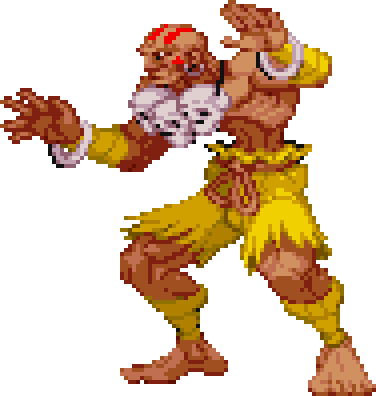
After playing street fighter, I concluded that there is a lot of cybertyping and identity tourism within the game. Clearly there are many different opportunities for identity tourism within this game. Though there are only 12 characters, the race, gender, and occupation of each gender seem to differ. Though the gender is limited to one female, whom seems to be of Asian or Caucasian dissent, this limits the amount of racial choice for the female, but a female can be played non the less. The cybertyping within this game is astounding. Each character has a “home” territory which they play at. These homes exemplify the stereotypes of each culture. Within India
References:
Dhalsim Picture. Retrieved October, 21, 2010 from:
http://strategywiki.org/wiki/Street_Fighter_Alpha/Characters/Dhalsim
Nakamura, L. (2002). Cybertypes: race, ethnicity, and identity on the internet. New York : New York

No comments:
Post a Comment